Volatility is the hidden dial that decides whether a session on Chicken Road is a calm country drive or a high-speed chase https://chickenroadgame-gr.gr/. For Greek players who appreciate this fast-moving single-reel crash game, understanding volatility enables set realistic expectations before the first stake is placed. We analyze how the game’s risk profile works with its unique mechanics, what return-to-player figures actually represent in practice, and how to adjust bet size and session length accordingly. By the end of this guide you will know exactly why volatility matters and how to use it to your advantage.
What Volatility Really Signifies in Chicken Road
Volatility describes how frequently Chicken Road payouts and how big those payouts tend to be. A low-volatility setting would produce frequent small wins, while the actual high-volatility nature of the game means long stretches without a cash-out followed by abrupt, significant rewards. This counts because it influences how large bankroll you want and how extended you should aim to play. Greek players commonly contrast the sensation to a slot with 96 % RTP but 5/5 volatility; the figure is tempting, yet the fluctuations are sharp. Acknowledging this prevents frustration when the multiplier rises steadily and pays endurance when the road eventually opens up.
High volatility also shapes emotional tempo. A player may observe twenty straight rounds conclude beneath 1.50× before a individual round climbs past 30×. That pattern generates a psychological flow quite dissimilar from the consistent drip of low-volatility reels. We hence regard volatility as a timing tool: it informs us when to reduce stakes, when to pause, and when to keep patient. By mapping the distribution of crash points over a hundred demo spins, we obtain a own volatility index that steers every subsequent decision.
Session Planning: Budget, Session Length and Exit Rules
A recommended starting allocation is 50–100 times the base bet. With a €1 stake that comes to €50–€100, giving roughly 50–100 tries before the session ends. Time limits are also important; after 30–40 rounds, fatigue can result in chasing losses by raising stakes. We suggest writing down three numbers before play: the target multiplier for cash-out, the stop-loss amount, and the maximum number of rounds. Adhering to these figures turns the game’s inherent volatility from a liability into a controlled variable rather than an emotional roller-coaster.
- Pre-session: work out 50–100× base bet and set a phone alarm for 25 minutes.
- Mid-session: after every tenth round, evaluate actual results to the pre-set stop-loss.
- Post-session: observe a 24-hour cool-off regardless of outcome to reset decision-making.
How the Game’s Mechanics Shape Its Risk Profile
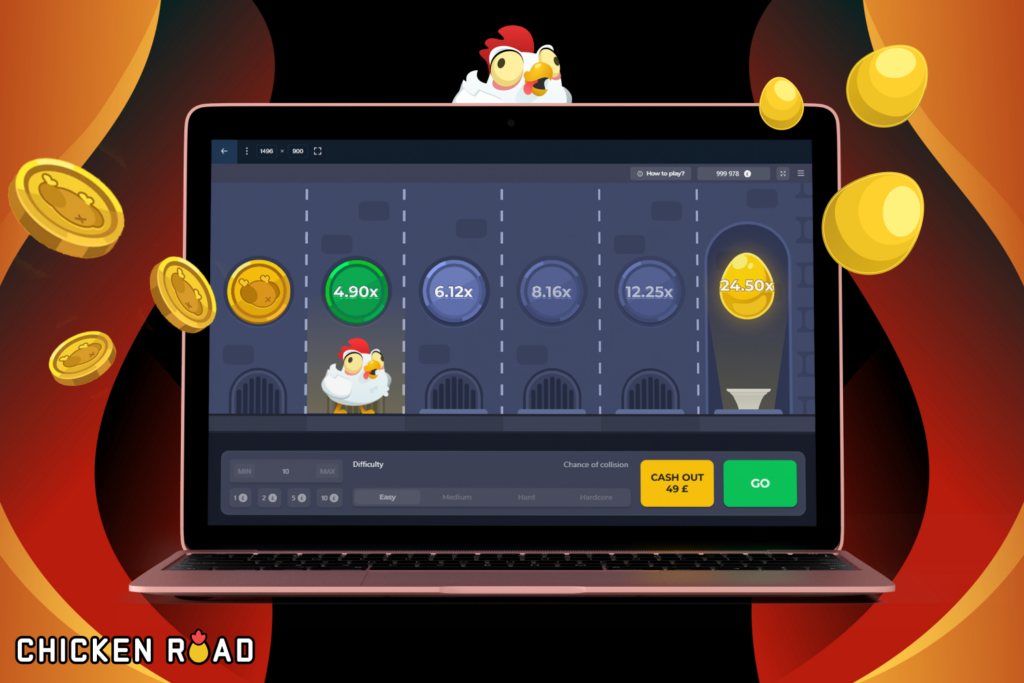
Chicken Road employs a single horizontal lane instead of reels, rows or fixed paylines. A cartoon chicken sprints forward while a multiplier rises from 1.00× upward. The player can cash out at any moment or continue for a bigger multiplier that may crash without warning. Because the crash point is generated by a certified random algorithm, the distribution of outcomes is wide, which is why the game is labelled high volatility. Unlike a five-reel slot with twenty paylines, there are no small line hits to soften the ride; every round is all-or-nothing until the cash-out button is pressed. This streamlined design focuses risk into a single decision point.
The absence of intermediate outcomes also compresses variance into one sharp spike. In traditional slots, a near-miss on two reels can still yield a token win; here the only binary result is cash-out success or total loss of stake. That binary nature magnifies the impact of each decision, turning the timing of the cash-out button into the sole lever of risk control. Understanding this mechanic lets us fine-tune our reactions to the rising multiplier curve with greater precision.
Comparing Chicken Road to Classic High-Volatility Slots
Classic five-reel titles with 96 % RTP and 4/5 or 5/5 volatility still depend on matching symbols across fixed lines. Chicken Road swaps out those combinations with a single timing decision. The result is a compressed distribution curve: either the round ends at 1.00× or it climbs into double or triple digits. This produces a steeper emotional arc than, for example, a slot whose biggest symbol combination appears once every 300 spins. Players who enjoy the suspense of watching a multiplier rise will find the experience more immediate, while those who like frequent small line hits may feel the absence of intermediate wins.
Another contrast lies in session length perception. A traditional high-volatility slot may need several hundred spins to reveal its true nature, whereas Chicken Road shows its variance within the first fifty rounds. That accelerated feedback loop allows us test strategies quickly, yet it also heightens the risk of over-adjusting after a small sample. Keeping a running log of crash points aids maintain perspective across both game types.
Bonus Bets, Bonuses and Their Impact on Variance
Many Greek-facing sites feature free bets or bonus cash that is available on Chicken Road. These promotions momentarily decrease personal volatility because part of the stake is paid by the operator. However, wagering requirements tied to the bonus can force longer sessions, increasing the chance of hitting the crash point. A practical approach involves treating bonus funds as a separate, higher-volatility bankroll and establishing smaller cash-out targets until the play-through is complete. This keeps the overall risk profile under control while still savoring the amplified multiplier swings the game is known for.
- Track bonus funds in a separate digital wallet to avoid accidental mixing with cash balance.
- Lower the cash-out target by 30 % while clearing wagering to offset the extended session length.
- Remove any net profit above the bonus amount immediately once requirements are met.
Theoretical payout, Bet Range and Highest Possible Win
Chicken Road’s RTP figure sits at 97 %, a figure that remains consistent across all bet sizes. The minimum stake is generally €0.10, letting cautious testers to sample the volatility without large exposure, while the ceiling can reach €100 per round for high-rollers. The maximum multiplier is unlimited in theory, although practical caps are imposed by each operator’s server settings. Players should confirm the exact ceiling shown in the game panel before investing serious funds. Because the RTP remains constant regardless of stake, bankroll management turns into the decisive factor rather than chasing an illusory “due” payout.
Bet sizing has a direct relationship with volatility. A €0.10 stake survives many more failed rounds than a €5 stake before the session bankroll is endangered. We therefore map three stake tiers—micro, standard, and high-roller—and give each tier its own cash-out target. Micro stakes might chase 15× or higher, while high-roller stakes often take profits at 3× to protect the larger absolute amounts at risk. This tiered approach keeps the same 97 % RTP in view while adjusting exposure to the game’s natural variance.
Useful Tips for Greek Players Navigating Volatility
Commence on demo mode to experience at least 100 rounds without financial risk. Observe the median crash point and the frequency of multipliers above 10×; these insights give a personal volatility reading that may deviate slightly from theoretical models. When switching to real money, commence with the lowest allowed stake and increase only after a predetermined number of successful cash-outs. Greek payment methods such as bank transfer or e-wallets usually handle instantly, so there is no need to hold large balances on-site. Finally, establish a cool-off period of at least 24 hours after any session that triggers the pre-set loss limit, making sure that volatility remains a calculated element rather than an impulse.
- Record the exact round number and multiplier for every cash-out above 5× to identify personal patterns.
- Employ two separate casino accounts: one for bonus play, one for cash stakes, to eliminate cross-contamination.
- Enable operator reality-check pop-ups every 15 minutes as an external limit on impulsive decisions.